
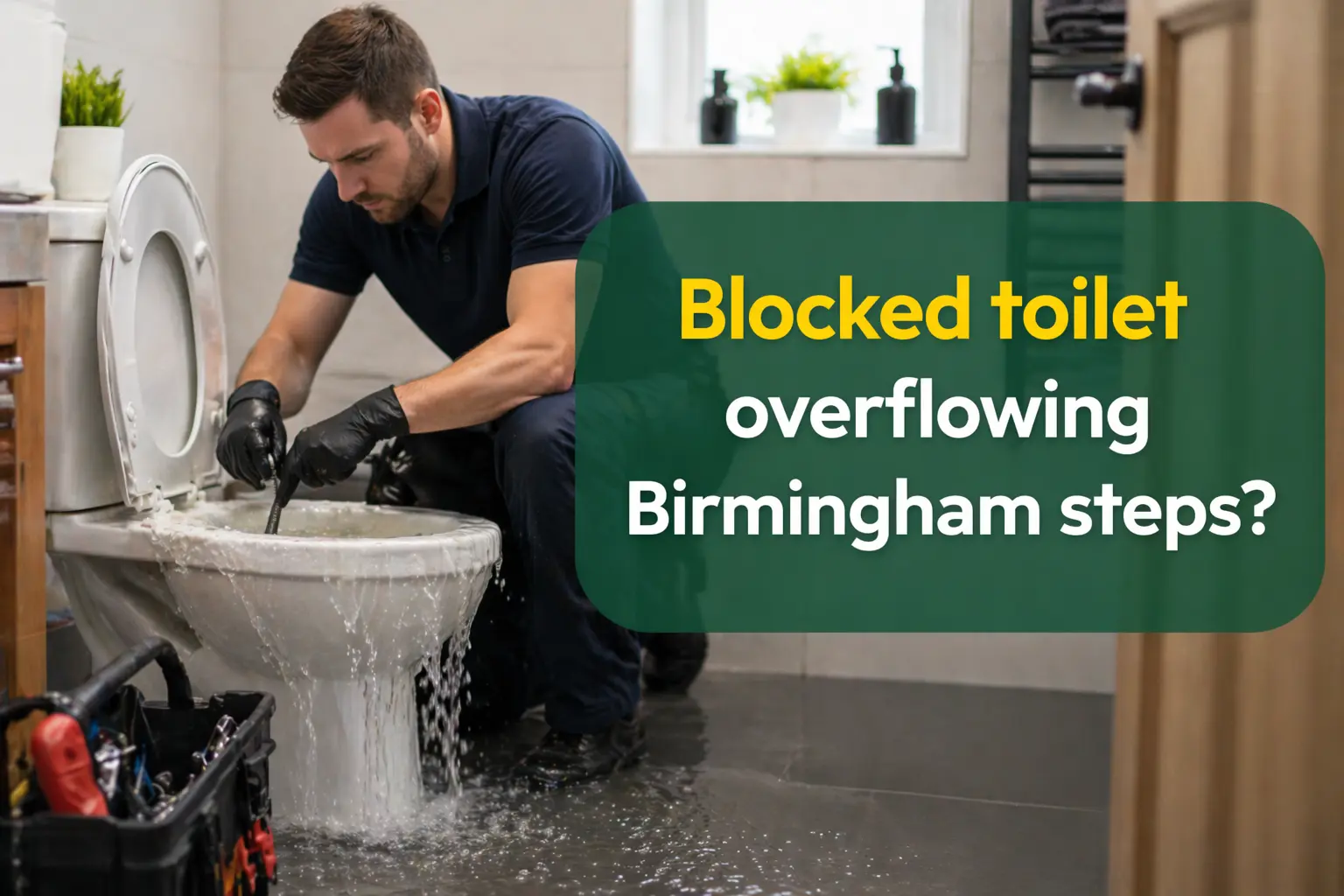
Blocked toilet overflowing Birmingham steps?
One of the most distasteful plumbing disasters that a house owner can encounter is a clogged toilet that begins to overflow. The spillage of water on your floor in the bathroom can do you tremendous harm in a few minutes and pose a hygienic hazard to your family. When you have a blocked toilet overflowing Birmingham, then a quick and calm action will save additional damages and also lower repair expenses.
The following is a step wise instruction on how to do it.
Steps 1, 2, 3: Turn off The Water Stream
The first consideration is to ensure that more water does not flow into the toilet bowl.
Take out the cistern lid and pick the float lightly so that the tank does not fill back up.
Switch the isolation valve behind or next to the toilet off.
In case you do not locate the isolation valve, switch off all the main water supply to your place.
Do not flush again. The flushing will add more water to the bowl and further increase the overflow.
Step 2: Tile Your Bathroom Floors
The water overflow may move rapidly on the tiles and infiltrate the floors.
Place old towels or dry cloths in the toilet.
Wipe the mop and bucket away standing water.
Use rubber gloves in order to prevent bacteria.
Within most houses in the Birmingham region, particularly the old ones, moisture may soak into subfloors made of wood and inflict permanent structural destruction unless timely cleaning is done.
Step 3: Determine the Prevention of the Obstruction
It is important to know what was behind the blockage to find the correct answer.
Common causes include:
Excess toilet paper
Wet wipers (including those that are labeled as flushable)
Sanitary products
Cotton pads or buds
The toys or foreign objects of the children.
Do not push it further down in case you think it is lodged inside.
Step 4: Clean a Toilet with a Proper Toilet Plunger
Flange plunger is a special toilet plunger, and it is even more effective thana regular sink plunger.
Make sure that there is sufficient water in the bowl to cover the plunger cup.
Place it on the opening of the drain and seal it.
Start with gentle pushing down, then apply steady and controlled plunges.
Once a couple of tries have passed, see whether the water starts draining normally or not.
Step 5: Attempt Toilet Auger (Plumbing Snake)
When the plunging fails, an auger can be used on a toilet to loosen up the deeper clogs.
Gently insert augmenter into the bowl.
To move in the pipe, rotate the handle slowly.
It should not be forced as it will scratch porcelain.
This is a useful tool in obstructions that are not visible on the trap.
Stay away of Chemical Drain Cleaners
Toilet blockages cannot be easily removed with the help of chemical drain cleaners, they may damage pipes. They can also pose safety risks in case there is need to engage the services of professional plumbers to service the system later.
Step 6: Observation of Wider Drainage Problems
If:
There are several toilets or sinks filling up.
Water trickles sluggishly in the house.
The blockage continues to recur.
There is a possibility that you have a more serious problem in your main drain line. Recurrent problems may occur due to tree roots, collapsed pipes or heavy build-up.
Drain rods and CCTV inspection are among some of the tools that professional plumbers rely on to locate and repair the problem.
Cases When a professional plumber is required.
Call an emergency plumber if:
The water overflow persists even when the water is switched off.
It is impossible to clear the blockage using simple tools.
Sewage back-up is indicated.
The problem recurs again.
A professional makes sure that the blockage is removed in a safe and hygienic manner.
Eliminating Future Toilet Overflows
It is always better to prevent a problem than to cure it. Here's how to reduce the risk:
Only flush toilet paper
Always avoid flushing wipes or with hygiene products.
Provide drain protection where feasible.
Parrametrically set schedule drain maintenance.
Train children on how to use the toilet.
The situation with a blocked toilet overflowing in Baltimore can get out of hand within a short duration unless addressed well. The most important things to do are to stop water supply, to secure your house and to take away the blockage in a safe manner. Whereas small obstructions can be corrected using a plunger or an auger, frequent or serious problems need to be addressed by the professionals.
Not just does fast action prevent your property against water damage, but also makes sure that your plumbing system is safe and functional. In case of doubt, it is always good to consult the experts to resolve the problem comprehensively and avoid any emergency in the future.