
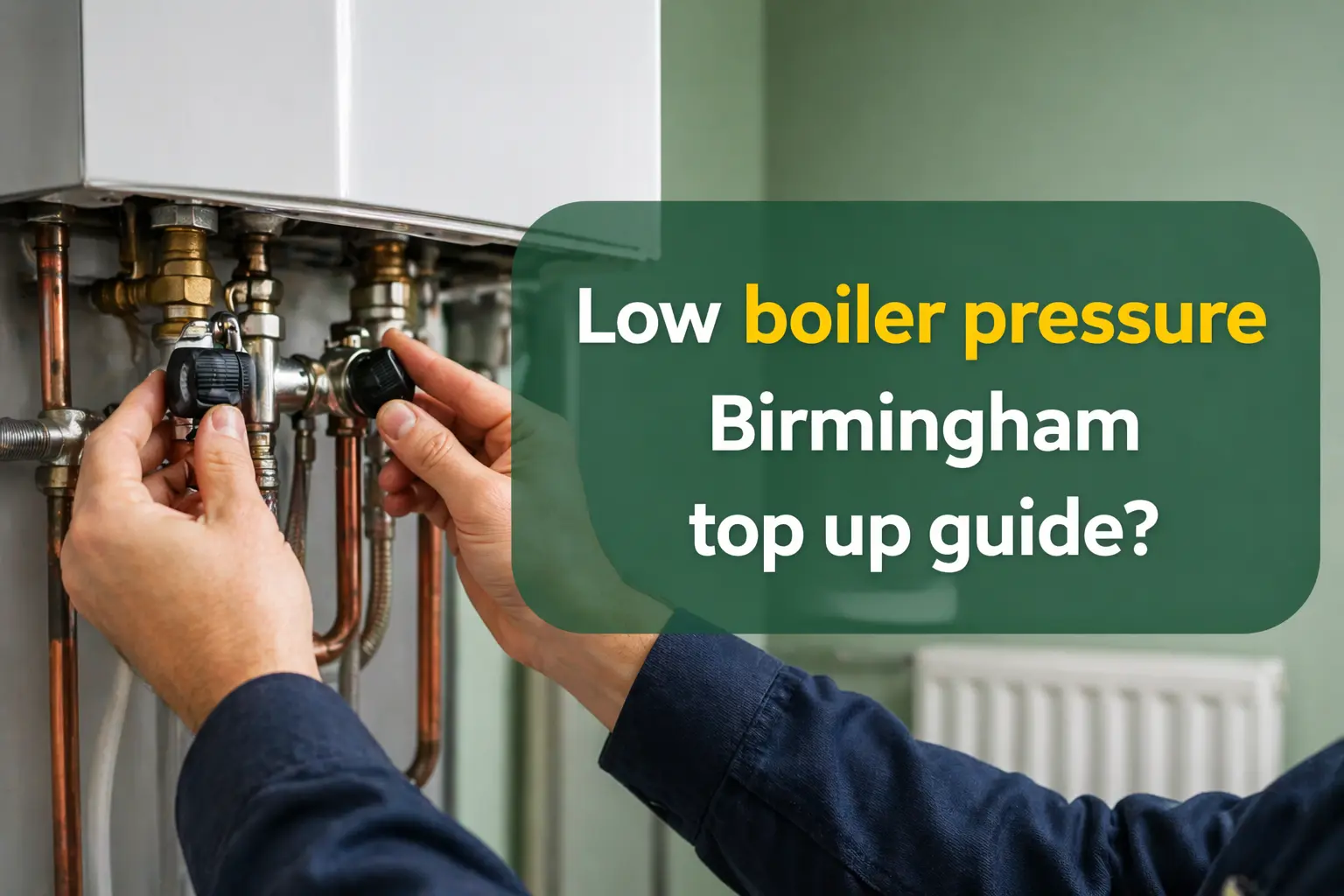
Low boiler pressure Birmingham top up guide?
Low pressure may be the reason why your boiler is not working or your heating is not functioning correctly. This is among the most prevalent boiler problems in the city of Birmingham, particularly in the colder seasons when the systems are performing more intensive duties. Top-up Boiler pressure is a fast and sophisticated thing in most situations.
What Is Boiler Pressure?
The heating system of your house is completely closed and full of water. The water must be at the right pressure so that it can pump around your radiators.
The majority of boilers ought to be located between:
1.0 and 1.5 bar (in case the system is cold).
When the pressure falls to a pressure less than 1 bar, your boiler may:
Stop working
Display a fault code
Struggle to heat radiators
Turn itself off completely
What Is the Reason behind Boiler Pressure Drop?
The low pressure does not occur by chance. Common causes include:
Bleeding radiators
Small leaks in pipework
Defective pressure discharge valve.
Recently drained system
General wear and tear
In case of repeated loss of pressure, then it could be a sign of a bigger problem that would need the attention of the professional.
How to Refill the Boiler Pressure, Step-by-Step
Test your boiler manual before you start. The vast majority of contemporary combi boilers operate a filling loop (a bendy hose of silver) below the unit.
Step 1: Turn Off the Boiler
Turn off the boiler and leave it to cool. This helps in the correct reading of pressure and prevents damages.
Step 2: Locate the Filling Loop
Look underneath your boiler. You should see:
A silver braided hose
Two minor valves (one in each end)
Other more modern boilers incorporate a filling key.
Step 3: Open the Valves Slowly
Close one valve, and then the other. There should be the sound of water going into the system.
Monitor the pressure on the gauge at the front of the boiler.
Step 4: Stop at 1.2-1.5 Bar
When the pressure has reached approximately 1.2 to 1.5 bar, both valves should be closed.
Limit should not be past 2 bar because excessive pressurisation may damage the system or result in a safety release.
Step 5: Turn the Boiler Back On
Turn your boiler on again and make sure that you have heating and hot water back to normal.
What Should we do in case the pressure continues to fall?
It is normal to top up every now and then (after 1 or 2 years). But when you are regularly called upon to repressurise it may indicate:
A hidden leak in the system
A faulty expansion vessel
A broken pressure relief valve.
A leak inside the boiler
When you see the water dripping outside on a copper pipe (and usually this is close to an outside wall), this might be a signal that the pressure relief valve is leaking.
A Gas safe registered engineer must always check repeated pressure loss.
When a Birmingham Heating Engineer should be called
You are to contact a professional in case:
The pressure falls once again in a few days.
Upon repressurising, the boiler no longer puffed.
You see visible leaks
The pressure rises too high
You do not know how to utilize the filling loop.
Birmingham, heating engineers are likely to resolve any problems of the pressure within a short period and avoid additional damage to the system.
What is the cost of a boiler pressure repair?
Typical local costs include:
Call-out fee: PS70 - PS120
Repair of expansion vessels: PS150 -PS300.
Replacement of pressure relief valve: PS120- PS250.
Repair of leaks: different prices depending on the severity
Problems handled in the early stages of their development can avert costly failures in the future.
Avoiding Future Pressure Issues.
To reduce pressure issues:
Bleed radiators meticulously (check pressure again after checking)
Annual boiler servicing in books.
Fix small leaks promptly
Check your pressure meter once a month.
Routine service will ensure that you have an affordable heating system when the weather turns colder in Birmingham.
Low boiler pressure is a widespread and generally easy to repair problem. When the system is leaking, gently replenishing it by filling the filling loop would in most cases return the heating to normal.
Nevertheless, when the issue recurs, one should look into it further. Constant loss of pressure may be an indication of more underlying structural faults that professional repair is needed.